Big Farm Homestead Fansite

 30
30





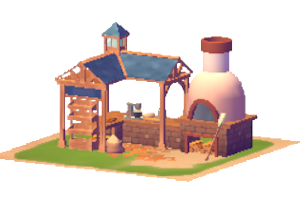
Level 4 starts with a guided tutorial to build a house for more workers. After this is completed, the game will shift its guidance to a questbook and you will have full control over how your farm functions, although buildings are still limited. Your first quest will be to build a Bakery, which produces Cornbread from Canned Corn. You will also have the ability to plant soybeans in your field. When you select a field, there is an option to select your crop.
Workers come from your Homestead building and houses. Upgrading these buildings gives more workers. Every building in the game requires 3 workers to build, and 1 worker per level to upgrade.
The Task Book (found at the bottom left of your screen) is your main guide, with 3 sections:
Character Quests (Side Note): You can ignore early character requests for products, as they are just a resource drain on your market. You can clear them when you have surplus stock.
Every quest has a yellow question mark that will take you to what you need to do.
Your player level (XP gained in the game) only controls what items and features are unlocked and asked for in the market. It has no impact on who you compete against when given the chance.
Competion is based on skill, and you always play against players with similar production ability, with success meaning harder competition. What is truly important is the size of your farm and the efficiency of your supply chains — how much you can produce to sell.
The biggest mistakes a new player makes is focusing on maximizing XP. Every time you level up, you unlock new products, and the Market will immediately begin asking for them. This creates impossible demands before you have the infrastructure - land, workers, buildings - cash and materials - to produce them. Leveling up too fast intentionally creates a resource deficit that stops your progress and creates the incentive to spend real money. Your goal is to control your leveling speed and build up your farm.
The simpliest way to slow down your growth is only collect storyline quests and save up (don't collect) regular quests. You aren't hurting your farm; you're making it stronger, both now and in the future. This reserve of completed quests makes a nice emergency fund if you need a little coin boost early in the game and can be collected strategically to level up. A good example is level 20 introduces potatos, taking 6 hours to grow. The market will want them right away. If you collect quests to level up right before bed, then you can plant potatos overnight and have a good stock waiting in the morning.
The market is going to be the foundation of your success in this game. I am going to teach you how to select and send contracts for maximum impact as we go, and the more slots you have, the more selection and flexibity you have. Slots 3 to 6 unlock with coins. Slots 7 to 9 unlock with gems. With focus, it is very possible to open slots 7 and 8 with gems earned in game over time. It also makes a great investment.