Big Farm Homestead Fansite


 80
80


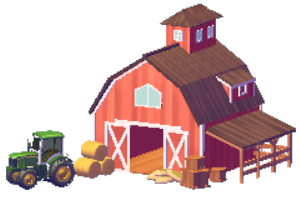
Level 5 introduces two new systems: upgrading and happiness. You perform your first structure upgrade (the Barn), which is a simple quest tutorial that increases your storage capacity. All upgrades from here forward (all buildings) will require coins and materials. Second, the game introduces the Happiness mechanic.
Level 5 allows you to purchase your first (and second) expansion. You have no choice on your first expansion. After that, try to buy expansion in a cohesive square or rectangle, rather than lines and snakes. Expansions are 9x9 tiles. Production buildings in the game are 6x6 or 6x9. It is really hard to fit multiple 6x6 buildings into a 9x9 square or 9x36 rectangle, but if you purchase them strategically to eventually make an 18x18, you can fit (9) 6x6 buildings easily. Or (6) 6x9 buildings. Acquiring additional land isn't overly important till level 12 because the game limits how many buildings you can have till then.
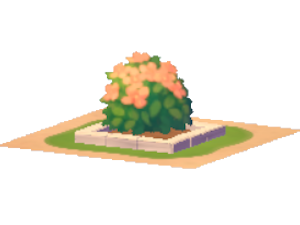
Level 5 introduces Happiness, the mechanic that balances your growth. Placing or upgrading Houses provides workers, but it reduces overall Happiness. This is why you build the Flowerbed — decorative items like this are the way to gain Happiness back.
The Homestead buildings are different in that they give both workers and happiness. This is why I highlight the homestead upgrades.
Happiness directly impacts your cost structure. Negative happiness increases your production costs, quickly eroding your profits. In contrast, positive Happiness reduces production costs (and will boost tournament scores later). Therefore, managing this balance is critical for financial success.
Since the relationship between Workers, Houses, and Happiness is complex and non-linear, I will give you a simple range to maintain cost efficiency and prevent profit loss: 40 - 80. This will give you the best cost reduction without eating up valuable land that can produce products.
It is strategically acceptable to let your Happiness drop to 10 if you need the Workers or space for a key upgrade or building, but you will want to recover it quickly by placing more decorations.
Level 5 unlocks the Building Edit Mode, allowing you to move and rotate your existing structures. This feature is crucial for long-term efficiency.